
For an office that runs on requests
Finance needs the close done. HR needs four people onboarded. Someone in your team is holding all of it in their head and a spreadsheet nobody else opens.
Three things that go wrong, and always for the same reason.
Nobody could see it in time.
Work arrives by tap on the shoulder
Half of it never gets written down. The half that does is in four inboxes, and nobody can say what the team is actually carrying this week.
The same person is always the bottleneck
Not because they are slow — because everything quietly routes to them and nobody can see it until they are three days behind.
“Who's doing that?”
Asked in a stand-up, answered with a shrug, and then done twice by two people or not at all by either.
Set up the way you actually work.
- One list per person, ranked. Everyone opens the same screen and already knows what they should be doing. No one has to be chased into a system.
- Delegation that sticks. Hand a task over and it leaves your list and appears on theirs, with the history of who had it and when.
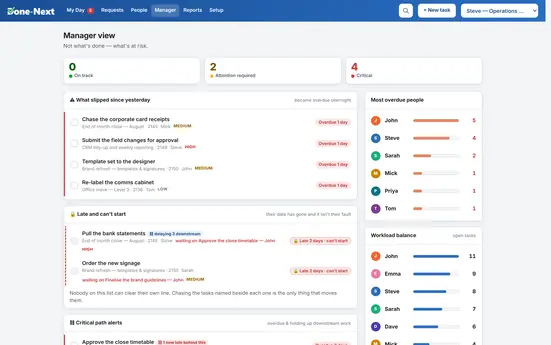
- Workload you can see before it breaks. The manager screen shows what each person is carrying and what is overdue, so work moves before somebody drowns in it.
- Deliberately small. No boards, no crews, no vans — this setup switches all of that off, so the whole app is six tabs and nothing to learn.
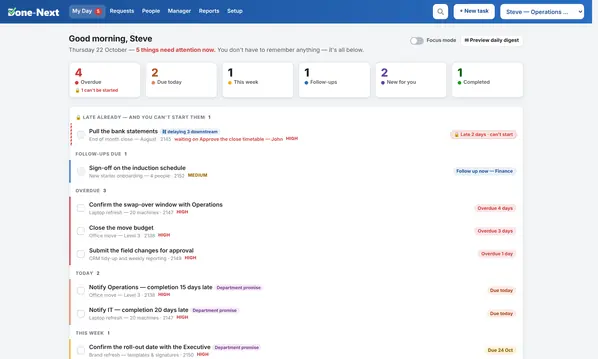
Real screens, from the demo you can open.
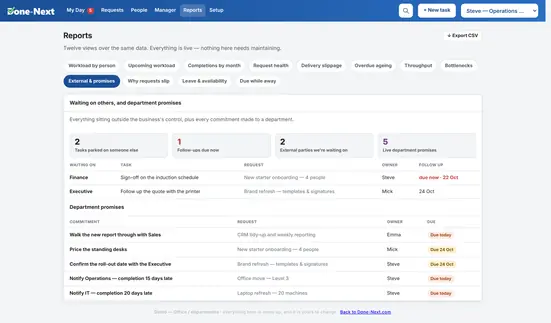
Not mockups. Every image on this page is a screenshot of the same demo linked at the top, taken automatically when the site was built.
Not quite you?
Then pick the nearest and change the words, or start from none of them. The software is identical in every case — these are starting points, not categories you have to belong to.
Have a look at your own week in it.
The Office / departments demo has a realistic fortnight already loaded — overdue work, a job running late, a crew double-booked. Click anything.